
When most marketers talk about SEO, they still focus on search rankings, keywords, and SERP positions. But after working closely with content strategies and analyzing performance trends, I’ve realized something important:
The future of organic visibility is not just search. It’s discovery.
And the center of that shift is Google Discover.
In my experience as a digital marketer and strategist, I’ve seen how Google Discover traffic can suddenly outperform traditional search traffic. What many people still don’t realize is that Google Discover SEO is very different from traditional SEO, and brands that understand this early will have a major advantage.
Let’s break this down from a practical perspective.
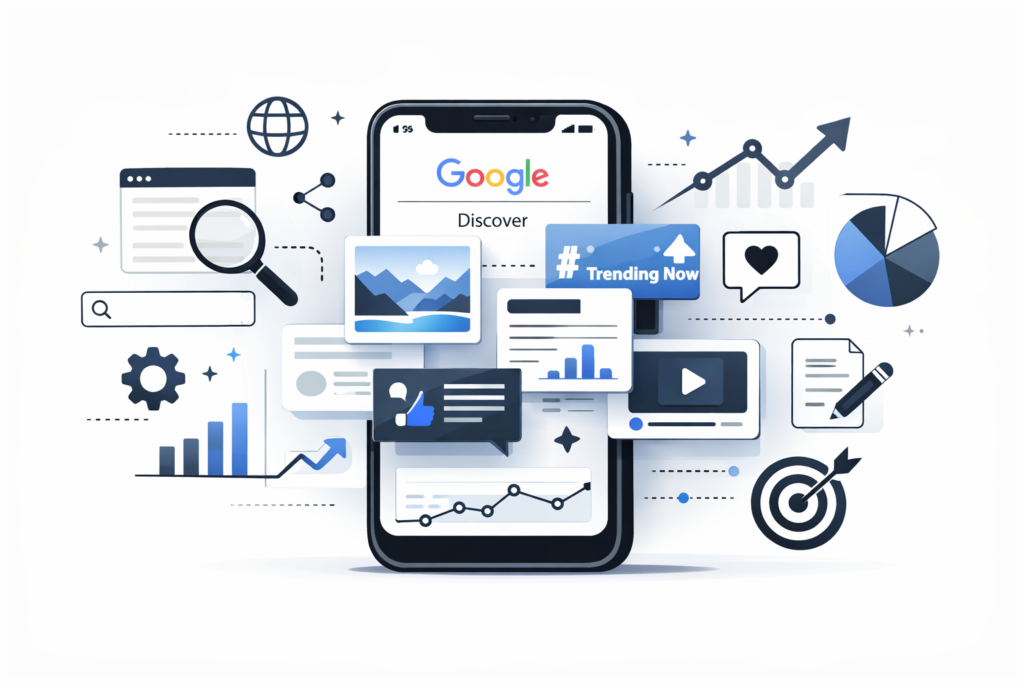
What Exactly Is Google Discover?
Google Discover is a personalized content feed that appears on mobile devices, inside the Google app, and on some Android home screens.
Unlike traditional search, users don’t type queries. Instead, Google Discover shows content based on interests, behavior, and engagement patterns.
From my observations and testing content strategies, Google Discover traffic behaves very differently from search traffic:
- Search traffic is intent-based
- Google Discover traffic is interest-based
This distinction completely changes how Google Discover SEO works.
When someone searches on Google, they are looking for something specific. But in Google Discover, the algorithm predicts what the user might find interesting and pushes content to them.
That means Google Discover traffic can expose your content to people who never searched for your brand.
For marketers, that’s a huge opportunity.
Why Google Discover Traffic Is Becoming So Powerful
Many publishers already know how valuable Google Discover traffic can be.
In some cases, Google Discover traffic contributes the majority of their organic traffic, even surpassing traditional search.
From my personal analysis of digital publishing trends, Google Discover traffic spikes can generate massive visibility overnight.
However, it comes with one challenge:
Google Discover traffic is highly volatile.
You might receive a huge surge of Google Discover traffic today and see it disappear tomorrow. This happens because Google Discover constantly updates content based on freshness, relevance, and engagement signals.
That’s why understanding Google Discover SEO is critical if you want consistent performance.
The Biggest Misconception About Google Discover SEO
One of the biggest mistakes marketers make is treating Google Discover SEO the same as traditional SEO.
This is where most strategies fail.
Traditional SEO focuses on:
- Keywords
- Backlinks
- Search intent
But Google Discover SEO focuses on different signals, including:
- Visual appeal
- Content freshness
- Topic authority
- User engagement
In my experience, Google Discover SEO works more like a digital newsroom strategy than a classic SEO strategy.
To succeed with Google Discover SEO, you need to think like a publisher, not just a marketer.
Why Brands Should Care About Google Discover
Earlier, Google Discover was mostly dominated by news publishers. But recently, the ecosystem has expanded significantly.
Now we see brands, ecommerce sites, creators, and businesses appearing in Google Discover feeds.
This shift means Google Discover traffic is no longer limited to media companies.
From a strategic viewpoint, this creates an incredible opportunity:
Google Discover traffic allows brands to reach audiences before they even start searching.
Instead of competing only in search results, Google Discover puts your content directly in front of potential customers.
If brands optimize properly for Google Discover SEO, they can build awareness much earlier in the customer journey.
The Core Strategy Behind Google Discover SEO
After studying successful examples and analyzing performance patterns, I’ve noticed that Google Discover SEO follows a few consistent principles.
1. Visual-first content
Google Discover is highly visual.
Content that performs well in Google Discover traffic feeds usually has:
- Large high-quality images
- Clean visual layouts
- Eye-catching thumbnails
In fact, images often determine whether a user clicks your content in Google Discover.
2. Strong headlines drive Discover clicks
Headlines matter even more for Google Discover SEO than traditional search.
A strong headline increases the chances of Google Discover traffic engagement.
In my experience, headlines that work best in Google Discover are:
- Curiosity-driven
- Trend-focused
- Insight-based
3. Topic authority matters
One article rarely succeeds alone in Google Discover SEO.
Instead, Google Discover favors websites that consistently publish around specific topics.
For example, if your site regularly publishes insights about digital marketing, SEO, and search trends, Google begins to associate your domain with that topic.
Over time, this increases the chances of receiving Google Discover traffic.
4. Timing and trends are critical
One key observation I’ve made is that Google Discover rewards timely content.
Trending topics often perform better in Google Discover traffic feeds because the algorithm prioritizes fresh and relevant discussions.
Brands that react quickly to industry developments have a higher chance of appearing in Google Discover.
AI Content vs Human Expertise in Discover
Another interesting trend I’ve observed is the role of AI in Google Discover SEO.
AI tools can help generate ideas and outlines, but when it comes to Google Discover traffic performance, human expertise still wins.
Content that performs best in Google Discover usually includes:
- Real insights
- Personal viewpoints
- Original analysis
As someone who studies content strategies regularly, I believe Google Discover SEO rewards authenticity.
The algorithm is increasingly capable of detecting low-quality or repetitive AI content, which means human-driven content remains the strongest advantage.
My Personal View: The Future of SEO Includes Discovery
From my perspective as a marketer and content strategist, Google Discover is redefining organic growth.
SEO used to be about ranking for keywords.
But Google Discover traffic proves that visibility can come even without a search query.
That’s a powerful shift.
If brands start taking Google Discover SEO seriously, they can unlock a new channel of organic growth that many competitors are still ignoring.
Final Takeaway
Google Discover is no longer just a publisher tool.
It has evolved into a major discovery engine for brands, creators, and marketers.
Those who understand Google Discover SEO today will be able to capture Google Discover traffic before the competition catches up.
And in my opinion, that’s where the next big opportunity in SEO lies.
Not just in searching.
But in being discovered.