
The streets of Leh, Ladakh are rarely associated with flames and chaos. But on September 24, 2025, the quiet Himalayan town witnessed something it had never seen before — a protest in Leh that spiraled out of control. By nightfall, four people had lost their lives, more than 50 were lying injured, and smoke was rising from a BJP office and a police vehicle that had been set on fire.
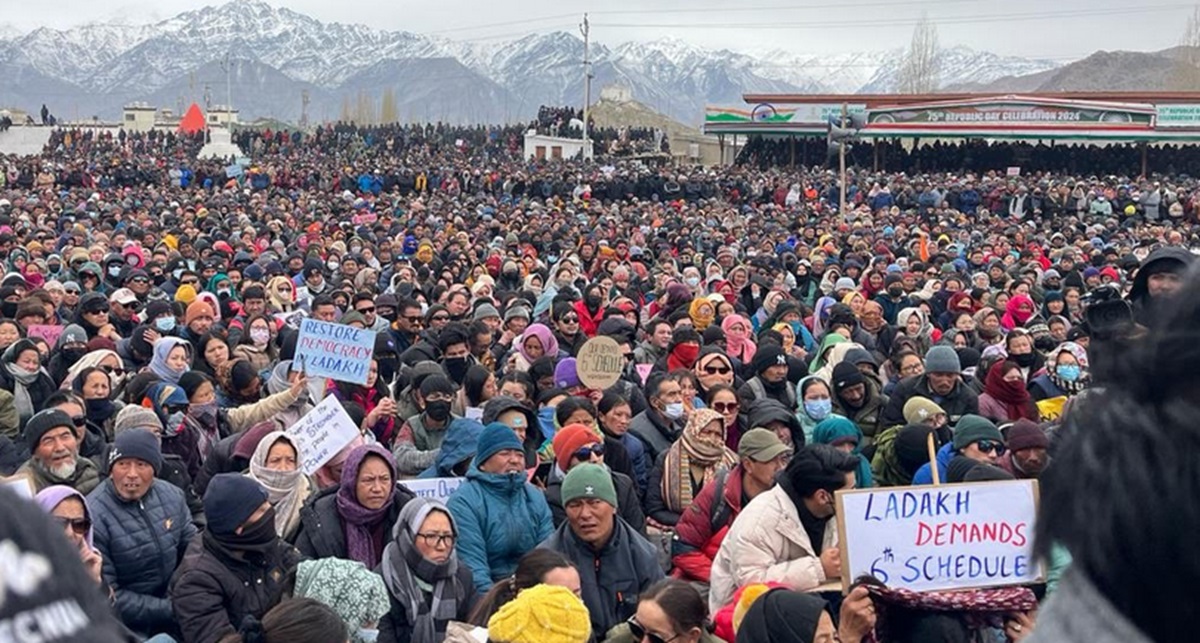
Curfew was announced in Leh within hours. Police sealed roads, gatherings were banned, and the otherwise calm atmosphere of Ladakh turned tense. For many, the Leh protest was not a sudden outburst but the result of years of simmering frustration.
Why People in Ladakh Took to the Streets
The demands at the heart of the Ladakh protest are clear. People want:
- Full statehood for Ladakh
- Constitutional safeguards under the Sixth Schedule
- A separate public service commission for jobs in the region
- Two seats in Parliament instead of one
Locals in Leh and Kargil argue that Ladakh’s fragile land, tribal culture, and ecology need protection. Since the creation of the Union Territory in 2019, many feel Ladakh has been run directly from Delhi with little say for its people. The September protest in Leh is seen by many residents as the loudest way of telling the Centre that Ladakh’s voice cannot be ignored.
From Hunger Strike to Violence in Leh
The Leh protest did not come out of nowhere. Activist Sonam Wangchuk and others had already been on a 35-day hunger strike, starting September 10, to highlight Ladakh’s demands. The turning point came when two elderly hunger strikers were hospitalized. Youth groups in Leh immediately called for a shutdown.
The shutdown quickly escalated. Stones were thrown, buildings were attacked, and police tried to disperse crowds with tear gas. In a matter of hours, what was meant to be a peaceful protest in Ladakh turned into one of the most violent days in Leh’s recent memory.
Wangchuk himself condemned the clashes and called off his strike, asking young people in Leh to avoid violence. “Our cause will only suffer if protests in Ladakh lose their peaceful nature,” he said.
Political and Security Reaction
The Leh Apex Body (LAB), made up of local social and religious leaders, has been at the center of organizing the protests. The Kargil Democratic Alliance (KDA) has backed LAB, showing rare unity between Leh and Kargil.
Authorities, however, acted swiftly. A curfew was declared in Leh, Section 163 of the BNSS was invoked, and even cultural festivals were postponed. Security forces patrolled the streets through the night, making sure the Ladakh protest did not spread further. The Centre has agreed to meet Ladakh leaders on October 6, but many in Leh remain skeptical.
What the Protest Means for Ladakh
For locals, this isn’t just another agitation. The protests in Ladakh are about protecting an identity shaped by mountains, monasteries, and centuries of culture. Losing statehood or constitutional safeguards, they argue, puts everything at risk.
At the same time, leaders admit that violence only weakens their case. If the movement in Leh turns bloody again, the focus will shift from Ladakh’s demands to law and order. That is why both LAB and KDA have appealed for calm, even as they prepare for talks with Delhi.